The story
Simunye's story: Bomani and Ndlovu
The story behind Simunye: Bomani, the Kimba tribe, the elephant Ndlovu, what the word Ndlovu means, and the music of Zimbabwe as background.
Book Simunye on Viator ↗Quick answer
Simunye follows Bomani, cast out from the Kimba tribe, as he wanders the African hinterland in search of home with his loyal elephant friend, Ndlovu. The production presents it through puppetry, dance, music and visuals, and names love and community as its message. Ndlovu means elephant in the Nguni languages.
The outline
The production's own description is short. Bomani is a member of the family of Chief Ekanjo, cast out from the Kimba tribe. He wanders the African hinterland in search of home, accompanied by his loyal elephant friend, Ndlovu. The Victoria Falls Theatre Company presents the story in an intimate open-air theatre, using puppetry, dance, music and visuals. Its stated message is love and community, and its site adds togetherness, connection and courage. That outline is the starting point for following the evening.
Bomani and the Kimba
The names in the story are the production's own. Bomani, Chief Ekanjo and the Kimba tribe are characters and peoples in the show's description, and this guide does not link them to any real community or place. What the description does give is the shape of the plot: an exile, a long search and a companion. Because the names belong to the story, there is no need to prepare anything before you go. Stories built on that shape are common across the world.
What Ndlovu means
Ndlovu is the Nguni word for elephant. Wikipedia gives it as the literal meaning of the name and describes it as a surname common in South Africa and Zimbabwe, most common among the Ndebele and Zulu peoples. So the name tells you what Bomani's companion is before he appears. In a story about being cast out and searching for home, an elephant is a fitting friend: a large, steady animal that is part of the landscape the story crosses.
Simunye, we are one
Local pages title the show Simunye We Are One. The production describes its message as love and community, and its own site speaks of togetherness and connection. That fits a story that begins with a character cast out and invites the audience to share the spirit of togetherness. It is a short and warm idea that stays the same however the programme varies, and it is the reason the evening works for mixed groups of friends, couples and families who would not choose the same film or the same dinner.
Elephants beyond the stage
The elephant on stage has real counterparts nearby. Wikipedia says Hwange National Park, which lies between Bulawayo and Victoria Falls, is the largest protected area in Zimbabwe, at about 14,600 km². It hosts over 100 mammal species and 400 bird species. A visit to the park is a separate day from an evening at the theatre, and nothing in the show promises live animals. But if the story makes you curious about elephants, the park is one place to learn more about the wildlife of the region.
Music and dance as background
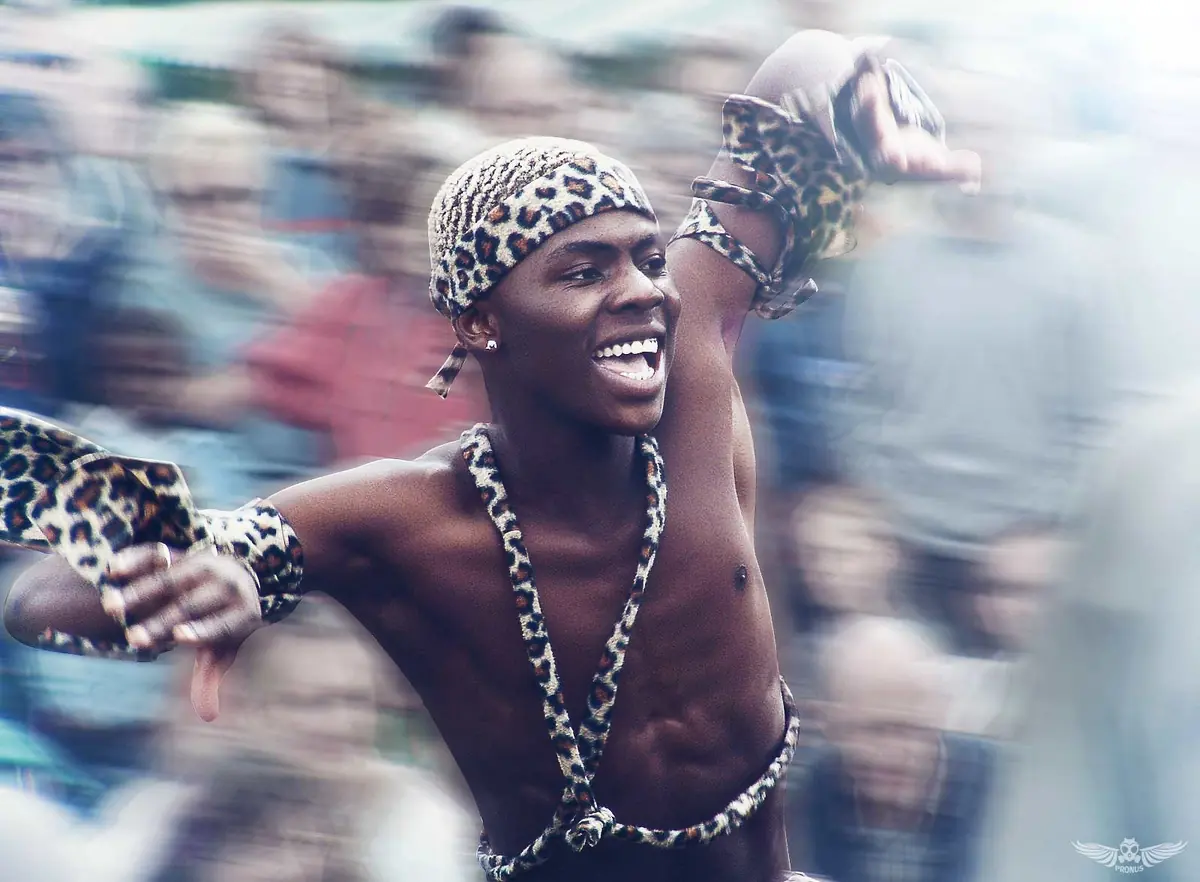
Wikipedia says Zimbabwean music relies heavily on the mbira, ngoma drums and hosho, and that the mbira is often accompanied by the hosho at ceremonies, weddings and other gatherings. It adds that the marimba entered Zimbabwean music in the early 1960s, when Kwanongoma College in Bulawayo adopted it. This is background to the country's music, not a list of what the production uses, because the instruments you hear on your night are for the production to decide. The photograph shows Zimbabwean dancing at a festival in Sheffield and is not from this show.
Frequently asked questions
What does Ndlovu mean?
Elephant, in the Nguni languages. Wikipedia describes it as a surname common in South Africa and Zimbabwe.
Do I need to know the story before I go?
No. The outline is simple: Bomani is cast out and searches for home with his elephant friend. The production tells it through puppetry, dance, music and visuals.
Sources